Great Race, Botched Event: Inside the Bahrain GP in Malaysia
Formula 1’s return to Sepang delivered a record 261,000 fans, a chaotic rain-hit race and one of the worst fan experiences I’ve had at a Grand Prix. I was there all three days. Here’s what worked, what didn’t, and why I won’t be back for F1 in Malaysia unless things change.
Harrison Ratcliffe · · 7 min read
Writer
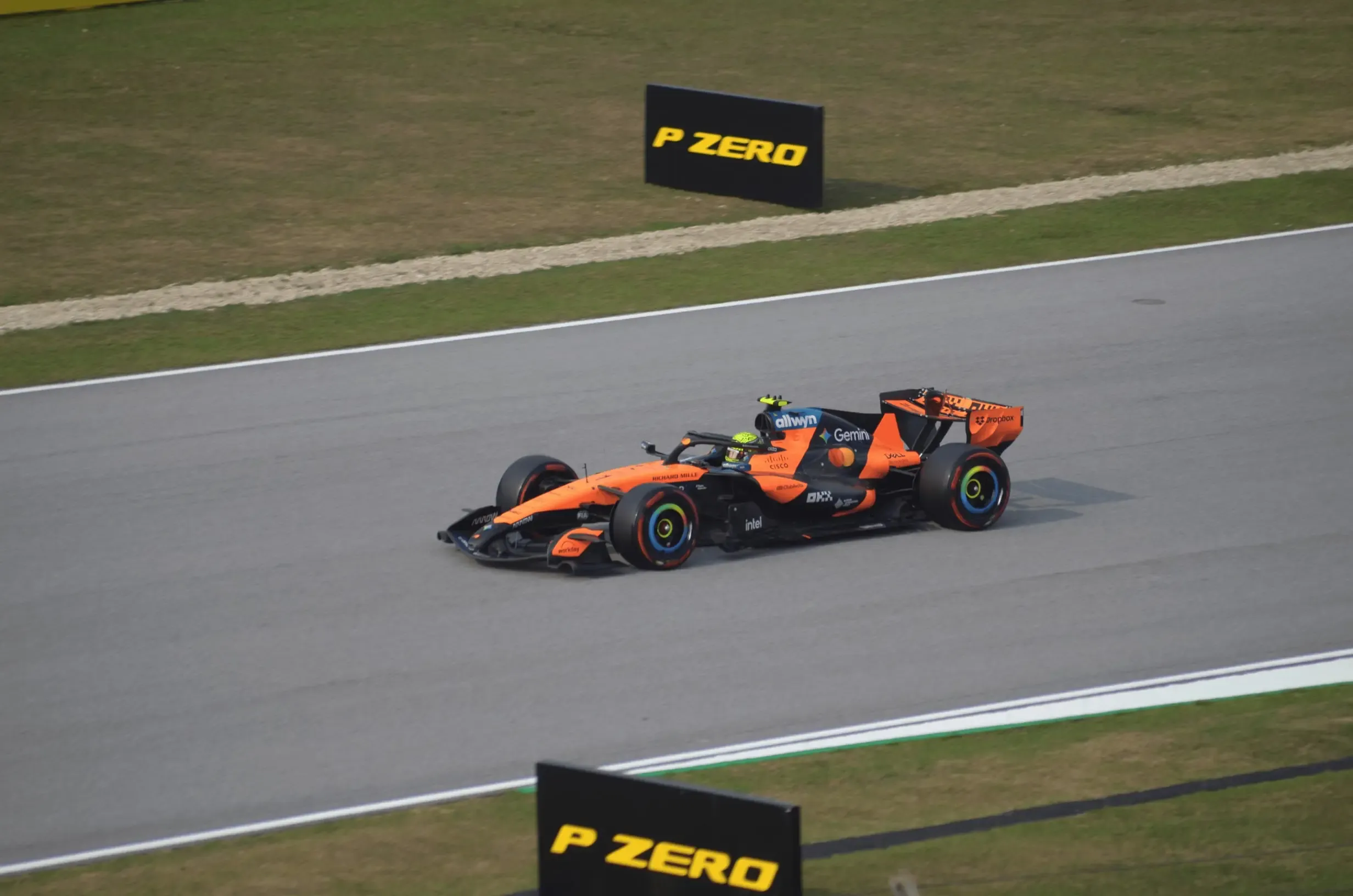
Formula 1's return to Sepang delivered a record crowd, a thrilling wet race and one of the worst fan experiences I've had at a Grand Prix.
The Gulf Air Bahrain Grand Prix in Malaysia drew a sell-out 261,000 people over three days, with 103,000 on race day alone. On track, it was everything Sepang has always promised: tropical rain, strategy gambles and a crowd that never stopped making noise. Off track, getting in, getting fed and above all getting home turned into a test of endurance that, for me, ruined whole days of the weekend.
I was there for all three days. This is what worked, what didn't, and why I won't be back for F1 in Malaysia unless something fundamental changes.
A Bahrain race on Malaysian soil
The original Bahrain Grand Prix, due in April, was called off along with the Saudi Arabian round because of the US–Iran conflict. In late July, F1 and the FIA confirmed a workaround: Bahrain would stage its race at Sepang on 2–4 October, slotted between Baku and Singapore.
It was Sepang's first Grand Prix since Max Verstappen won there in 2017. The setup was unusual. The circuit was Malaysian, but the branding and most of the organisation belonged to Bahrain International Circuit (BIC). Bahrain reportedly paid the estimated US$70–80 million hosting fee and kept the ticket revenue.
The timeline was brutal. A race that normally takes a year to plan was put together in roughly ten weeks. That context matters, and it explains some of what went wrong. It doesn't excuse all of it.
Race day: soaked, then stalled
Sunday's race started 1 hour 33 minutes late, first because of a deluge and then because the cars themselves stopped working.
The storm hit about 20 minutes before the 3pm start. I arrived completely soaked. Water got into my bag and killed my DSLR. We found some shelter, but the grass areas were flooding and turning to mud.
Race control pushed the start back 40 minutes. Then came the farce. This was the first time the 2026 cars, with their 50-50 split between combustion and battery power, had run in the wet. On the formation lap, pole-sitter Verstappen lost drive. Hamilton, starting second in the Ferrari, pulled over saying nothing happened when he pressed the throttle. Liam Lawson, Gabriel Bortoleto and Valtteri Bottas appeared to suffer similar problems, and the red flag came out.
The FIA later blamed a never-before-seen combination of low engine speed, low grip, wet-weather energy settings and Sepang's sector layout. During the delay it sent every team a software update that lifted the energy limit in the affected sectors, and it has promised a full review with the teams and engine makers. Hamilton summed up the day by comparing it to the "Lego race" staged before the British Grand Prix.
After another 53 minutes, the race finally got going behind the safety car, followed by a standing start. Red Bull and Mercedes chose intermediates; Ferrari and McLaren gambled on slicks. Verstappen fell to third at the start, passed Kimi Antonelli after a lap-13 safety car, and won by 2.3 seconds. George Russell's outside title hopes ended with a late engine failure, and Hamilton passed Isack Hadjar at the end for his first podium since Silverstone.
For all the farce, it was a genuinely entertaining race, and the atmosphere in the stands was electric.
Getting there: fine, until it mattered most
Getting to the circuit worked reasonably well on Friday and Saturday, then fell apart on race day.
Private cars and Grab rides were reportedly stopped at the perimeter, parking was limited and expensive, and motorbikes were banned. That pushed almost everyone onto free shuttle buses from KLIA Terminal 2, Mitsui Outlet Park and Bandar Baru Enstek. Unlike Sepang's own MotoGP shuttles, none ran from central Kuala Lumpur, so city-based fans had to take the airport train first.
My inbound shuttle trips on Friday weren't bad, and Saturday was a big improvement. Sunday was another story. The shuttle queue at the airport was so long that we gave up and paid £25 for a taxi just to arrive in time. Plenty of fans weren't so lucky: people were still arriving 30 to 45 minutes after the race had started.
Inside the circuit: queues for everything
Once inside, the basics of food and water simply weren't scaled for the crowd.
Food. I queued 2 hours 30 minutes to be served, and the burger I got was undercooked and soft in the middle. There were barely any food outlets for the number of people. The C Hillstand, which was completely sold out, had just two food vendors. Prices made it worse: fried rice was reportedly going for RM50 at the circuit, against about RM7 outside.
Water. Fans weren't allowed to bring their own food, water or drinks, so everyone was forced to buy from vendors, at up to RM10 a bottle in the main grandstand area. Those queues were long too. The free water fountains had their own long queues, and in some cases only one tap worked out of the six that were supposed to. In tropical heat, with no shade reported in many queuing areas, that is a safety issue, not an inconvenience.
Security. For an event that confiscated water bottles at the gate, security at the C Hillstand was strangely thin. There were two guards with handheld metal detectors, and I never saw them use the detectors once or check a single bag.
Cameras. Before the race, fans asking about the camera policy got different answers depending on who they asked. The organisers then said the policy would be announced soon. It never was. At the circuit, plenty of people had cameras with big lenses, and only a few were told by security they couldn't use them. I had no problems, and neither did lots of people around me, but nobody should have to guess.
Toilets and signal. The toilets were okay, though not great. Mobile data was very poor with so many people in one place. That's normal at big events, and I had the same issue at Silverstone, but it made finding information or booking a ride even harder.
Getting home: the part that ruined it
Leaving Sepang took me a minimum of four hours on most days, and it was frankly dangerous.
Friday. There was no signage, no staff and no crowd management. When empty shuttles turned up, people sprinted towards them and stood in front of them to force the drivers to stop and open the doors. People were banging on the windows and running into the middle of a very busy road. It is extremely lucky nobody was seriously hurt or killed. I wasn't alone in that experience: one Malaysia-based creator left at 5:45pm and didn't board a bus until 9pm, and other fans reported queueing for four hours.
Saturday. The fix was proper queue lanes for the shuttles. It helped with order, but not with scale. Tens of thousands of people stood in those queues in boiling heat, and I saw several people pass out and be taken away by staff. Many fans left early to beat the rush, but so many had the same idea that they still waited for hours.
The bus ride itself was no relief. Our driver nearly hit several cars and had to slam on the brakes, on a bus packed like sardines with people standing. Then the air conditioning died. Some passengers felt so ill they asked the driver to let them off to walk, from a point that was still about a three-hour walk away. Every day I could see hundreds of people walking along the busy highway, choosing hours on foot in the heat over the shuttle system.
Sunday. I couldn't face the shuttles again, so we booked a taxi. That still meant two hours of waiting, because traffic around the circuit was enormous and no lane was closed off to let buses move in and out quickly. Even taxis were struggling to get through. My own driver told me taxis were being turned away near the track.
Communication: a 'huge success'
Communication with fans was shocking, and the organisers have yet to acknowledge that anything went wrong.
The official verdict, in a joint statement from F1, the FIA, BIC and Sepang International Circuit (SIC), was about the record crowd. BIC's chief executive called it the biggest event ever held at SIC. Nothing in that statement spoke to the people who queued for hours, walked the highway or collapsed in the heat.
The responsibility is also hard to pin down. Transport operator Rapid KL said its buses ran exactly as agreed with BIC and SIC, and that traffic coordination around the circuit was handled jointly by the organiser and the authorities. Even the numbers didn't match: Rapid KL announced 95 free shuttle buses, while SIC cited 115 external and 30 free ones. Many fans online blamed BIC for running crowd flow instead of Sepang, which knows its own circuit.
The ten-week timeline was a real constraint. But organisers expected about 200,000 people, and they got 261,000. Underestimating the crowd by more than 60,000 doesn't explain why Friday had no staff or signage at all.
Verdict: yes to Malaysia, no to this
Sepang proved it deserves Formula 1. The event around it didn't.
The circuit is brilliant, the racing was entertaining even with the chaos, and 261,000 fans proved the appetite is there. The atmosphere was one of the best I've experienced. But I lost a camera, hours of every day and most of my patience to an operation that couldn't feed, water or move the crowd it sold tickets to.
I would go back to Malaysia in a heartbeat. F1 in Malaysia? Absolutely not, unless Sepang runs it the way it runs MotoGP, with shuttles into central Kuala Lumpur and an operator who knows the venue. Talk of Sepang returning permanently is growing, although ESPN reports the earliest realistic date under current deals is 2030. If it does come back, I hope the people in charge read the fans' accounts, not just the attendance figure.
- #Bahrain Grand Prix
- #Bahrain GP 2026
- #Sepang
- #Sepang International Circuit
- #Malaysia
- #Malaysian Grand Prix
- #F1 2026
- #Formula 1
- #fan experience
- #race review
- #Max Verstappen
- #Lewis Hamilton
- #FIA
- #F1 logistics
- #Rapid KL
- #Bahrain International Circuit
Comments
No comments yet. Be the first.